For thousands of years, the many herbs and spices of the Far East have brought an aromatic and flavorful punch to Indian cuisine. In more recent years however, science has proven that these spices also possess a host of medicinal qualities.
One particular spice blend sits on the shelves of many kitchens across South Asia, revered for its slight sweet and savory character, as well as its abundance of health benefits…
I’m talking aboutgaram masala.
At my house, garam masala is our go-to when we want to add an Indian dimension to our dishes.It’s a blend of spices that adds incredible depth and complexity to food.
In Hindi,garammeans hot, andmasalameans spices. This warm and pungent spice blend originated in the north of India, helping to warm bellies and lift moods during chilly winters.
Its popularity quickly saw it become a staple throughout the country, with different regions adapting it to suit their unique culinary character. In the north, it tends to be sweet and pungent, while in the far reaches of the south, hot red chilies are incorporated into the blend.
Unsurprisingly, garam masala packs a healing punch too.
Several of the diverse spices in this blend are proven to support a healthy immune system and keep colds, flu, and other bugs at bay. Garam masala is also chock-full ofantioxidants, which further boosts immunity, and can reduce inflammation.
According to Ayurvedic medicine, the spices in garam masala are warming,increasing the metabolismand aiding digestion. Cloves and cumin keep indigestion at bay and prevent acid build-up in the gut, while black pepper is a natural metabolism booster.
Preparing your own homemade garam masala blend allows you to capture the perfect balance of all the flavors present. You can tweak the levels of warmth, sweetness, heat and spiciness to suit your own taste buds.
Here’s an easy recipe to try at home!
Garam Masala Spice Blend
Ingredients:
1 tablespoon ground cumin
1 ½ teaspoons ground coriander
1 ½ teaspoons ground cardamom
1 ½ teaspoons ground black pepper
1 teaspoon ground cinnamon
½ teaspoon ground cloves
½ teaspoon ground nutmeg
Instructions:
Mix cumin, coriander, cardamom, pepper, cinnamon, cloves, and nutmeg in a bowl.
Transfer the mixture to an airtight container, and store in a cool, dry place.
*Note:For a more pungent and flavorful blend, you can dry roast the cumin, coriander, cardamom and black peppercorns, then grind them in a coffee or spice grinder.
Garam masala is unbelievably versatile — add a dash to soups, curries, stews, dahls, and legume or vegetable-based dishes. If you’re a spice fiend like me, you can even experiment with adding it to stir fries. It goes great in homemade samosas too!
As we move deeper into fall, I find myself craving spicier, more robust meals, and garam masala packs a punchy flavor hit every time.
Give it a try and let us know what you think!
Stay curious,
Nick Polizzi Host of Proven: Healing Breakthroughs Backed By Science & Founder of The Sacred Science
Today we’re going to embark on a journey into India – to learn a powerful breathing practice called Nadi Shodhana Pranayama that’s easy to do. It will calm your heart and quiet your mind…
The technique is called Nadi Shodhana Pranayama, or alternate nostril breathing. In Sanskrit, the word “Nadi” means channel or flow, the word “Shodhana” means clarifying or purifying, and “Pranayama” means to take control of one’s breath.
During this practice, you’ll experience a sense of peace almost immediately. But that’s just the tip of the iceberg.
Studies indicate that, over time, it can improve cardiovascular health and lung function, as it balances your heart rate. This in turn reduces your stress, which we know is good for overall physical and mental health. There is also strong evidence that alternate nostril breathing improves brain function.
Nadi Shodhana Pranayama has a long history in yoga and ayurvedic medicine as a reliable way to achieve mental, physical, and emotional balance.
For me, it’s a go-to when I’m stressed.
And it’s safe for just about anyone.
Unless you have a serious cardiovascular condition like COPD or asthma, you can do it right now with no fear. (And if you do have a condition, it’s probably still safe, but ask your doctor first.)
Find a comfortable chair, floor cushion, or mat. Sit up as straight as you can, but don’t strain. This is not a yoga pose.
Let your left hand rest gently in your lap. Bring your right hand up to your face.
Place the index and middle fingers of your raised hand lightly against the space between your eyebrows.
Close your eyes.
Take a nice, long, easy deep breath through your nose – inhale then exhale.
Close your right nostril with your thumb, and then inhale slowly through your left nostril.
At the top of your in-breath, close your left nostril with your ring finger, so that both of your nostrils are closed.
Pause for a moment.
Release your thumb from your right nostril and exhale (keep your left nostril closed).
Pause again for a moment.
Now reverse the process. Breathe in slowly and steadily through yourrightnostril. At the top of the in-breath, close up both nostrils again, pause, and then release your out-breath through your left nostril.
Pause again. Repeat the breathing process, alternating nostrils. Do this several times, slowly and mindfully.
Here is an illustration with the basic positions:
Well? What do you think? If you did this practice even for just a few minutes, you probably feel more relaxed.
Am I right?
Take a few minutes and try this whenever you need to calm your mind, and then share it with friends. Better yet, share it with enemies (or people you disagree with)!
Stay curious,
Nick Polizzi Host of Proven: Healing Breakthroughs Backed By Science & Founder of The Sacred Science
Since the dawn of humankind, medicinal mushrooms have played a pivotal role in human destiny.
Not only did the ancient wise ones turn to mushrooms for food, but they knew to call upon the mushroom to aid in healing. And this wasn’t just one culture in a tiny sliver of the world—just abouteverycivilization throughout time has revered and used medicinal mushrooms.
For thousands of years,Traditional Chinese Medicine, Japanese, and Tibetan medicine have used a variety of mushrooms including reishi, shiitake, maitake, turkey tail, cordyceps, and chaga to promote health, longevity, boost the immune system, improve energy and endurance, detoxify the system, and help ease countless ailments.
Hippocrates, the ancient Greek physician, considered “the father of medicine,” said the amadou mushroom(Fomes fomentarius)could cauterize wounds. TheAncient Egyptiansbelieved mushrooms were a “gift from the God Osiris” and associated them with immortality. So sacred were mushrooms that only Egyptian royalty was allowed to touch or eat them.
Mushroom medicine has been used for thousands of years.
In Brazil,theAgaricus blazei Murrillmushroom was traditionally used to fight physical and emotional stress, stimulate the immune system, and treat circulatory and digestive problems.
Even our hunter-gatherer ancestors knew to use mushrooms. A5,300-year-old-icemandiscovered frozen in the Alps, was found to have suffered from intestinal parasites that would have likely caused stomach pain. In his possessions, scientists found twobirch polypores(Fomitopsis betulina)—which are said to have antiparasitic, antibiotic, and immune-boosting properties—and they contain toxic oils that create laxative effects.
Finally, the science has caught up to the natural medicine wisdom of our ancestors. There are now hundreds of studies that support the use of mushrooms medicinally to help improve our overall wellness, improve energy and endurance, fight depression and anxiety, rebalance the gut microbiome, lower inflammation, boost memory, productivity and concentration,support immunity, promote longevity, and so much more.
In this beginner’s guide, I aim to illuminate the mysterious yet magical world of medicinal mushrooms, sharing ancient knowledge and wisdom about what they are, what they do, the best ones to try using, how to prepare them, where to buy them, and more.
What Are Medicinal Mushrooms?
First, a brief Biology 101 refresher.
Mushrooms often get lumped in with plants, but they’re actually part of thefungi familythat includes yeast, molds, mildews, rusts, and smuts.
“Mushrooms are noble organisms,” David Wolfe, nutritionist and farmer, explained to me in our docu-seriesRemedy: Ancient Medicine for Modern Illness. “They sit in that karma free zone of recyclers. They take stuff no longer usable and make it usable for some other organism.”
Fungi are like a long-distant cousin to humans.
About a billion years ago, fungi branched off from animals (not from plants).And when you compare human cells to mushroom cells, they’re very similar.
You actually have fungi living on and inside you right now. Everyone does. This isn’t a big deal—as long as our immune system and gut microbiome remain healthy and balanced, we live in harmony.
To date, we’ve classified over 100,000 different mushroom species, but there may be as many as3.8 million.
Mushrooms can be poisonous, edible, psychedelic, ormedicinal(also known as functional).
Functional mushrooms are believed—and in some cases have been scientifically proven—to have healing properties. Studies show that humans respond more to mushrooms than plants.Surprisingly, scientists believe this is because we’re more closely related to mushrooms than we are plants, and because we’ve co-evolved together.
What Do Medicinal Mushrooms Do?
It’s almost easier to explain what medicinal fungidon’tdo, because they do so much.
Most of us know mushrooms as food—in fact, they’re asuperfood. Adding edible mushrooms like shiitakes, chanterelles, and lion’s mane to your diet means you’resupercharging your body with vital nutrientsincluding:
B vitamins
Phosphorus
Vitamin D (note: store bought or those farmed with little sunlight won’t have as high a dose)
Selenium
Copper
Potassium
Ergothioneine,(an antioxidant)
Glutathione (another antioxidant)
Riboflavin
Niacin
Fiber
More protein than most vegetables
Provide all the essential amino acids (especially important for vegetarians or vegans)
Plus, edible mushrooms are low in calories, carbohydrates, fat, and sodium, and cholesterol-free.
In truth, mushrooms do much more than just provide essential nutrients.
Cardioprotectant(protects the cardiovascular system)
Nephroprotectant (protects the kidneys)
Hepatoprotection (protects the liver)
Chemoprotectant (protects against toxic or adverse effects from chemotherapy)
Radioprotectant (protects against radiation damage)
Immune health
Improved brain health
Improved gut health(mushrooms are considered a prebiotic—the stuff our healthy gut bacteria feast on to grow stronger and multiply)
Nervous system support
Improved sleep
What gives mushrooms such a potent punch are theirbioactive compounds, mostly thepolysaccharides—a slow carbohydrate that takes a long time for your body to break down and digest—found in mushrooms.
Depending on their structure, polysaccharides can store energy, send cellular messages, and support cells and tissues.
Mushrooms contain a specific powerful polysaccharide–β-glucans—that are rich in fungi, bacteria, yeast, and algae—that stimulates the immune system.
Andstudieshave found mushroom β-glucans linked to health benefits and properties including anticancer, cardioprotective, hepatoprotective, antioxidative, antimicrobial activities, and immunomodulatory (stimulates or suppresses the immune system depending on what the body needs to fight infections and cancers), andantibiotic properties.
What Are The Best Medicinal Mushrooms?
Medicinal fungi can serve many purposes—and often different ones, depending on the mushroom.
Some boost brain function, others improve energy, reduce symptoms of anxiety or depression, activate or suppress the immune system depending on what the body needs, support heart health and much more.
Most health practitioners recommend specific mushrooms to address specific sicknesses. With that in mind, as you read the list below, consider what health areas you most want to work on.
And this isn’t an exhaustive list. There are other medicinal mushrooms that people use. But here are 11 of the most common and easier to access mushrooms that are worth considering adding to your healing journey.
I’ve included suggested preparation methods and doses, however dosing is individualized. To date, there is no modern consensus from the scientific community on what constitutes a therapeutic dose. The doses included are based on traditional herbal medicine, mainly.
For tonic purposes and treatments, the dose is low, about 0.5-3 grams per day.
For all culinary mushrooms, the dose is as much as you may consume during meals.
A good rule to use whenever incorporating supplements into your diet is to start small and pay close attention to any changes in your body and how you feel. Give yourself a few days on the small dose and slowly work up.
11 Mighty Mushrooms To Heal And Build Overall Wellness
Shiitake
Anticancer – Heart support – Immune support – Body Composition
Prized as a delicacy and native to East Asia, the shiitake mushroom(Lentinula edodes)has enjoyed a role in Chinese, Korean, Japanese, and Russian medicine for thousands of years. It was even and gifted to emperors by tribes who foraged it in the wild.
This “Queen of Mushrooms” is known as anelixir of life.In China it symbolizes youthfulness and virility, and it is known for having aphrodisiac properties.
Grown on fallen logs, the Chinese have also turned to shiitake mushrooms to support circulation and longevity. That makes sense when you learn that shiitake mushrooms contain high amounts of natural copper–a mineral that supports blood vessels and the immune system.
Shiitakes also contain polysaccharides that contain a compound known as lentinan, which strengthens the immune system. You’ll also get a dose of beta-glucans when you introduce shiitakes into your system. Beta-glucans can boost white blood cell production that enhances your body’s ability to fight off harmful pathogens like viruses, bacteria, and toxins.
Shiitake mushrooms are commonly used to help treat fatigue, indigestion, edema, anemia, chronic hepatitis, hypertension, and hyperlipidemia.
Suggested Preparation Method:Cooked (Sautéed, Tea, Soup), Extract (Liquid or Powder)
Suggested Dose:5-10 grams per day to improve immune system and heart health (tonic), 1-2 fresh mushrooms daily, 6-16 grams of dried mushroom in teas – soups – dishes, 6-9 grams dried mushroom for decoction, 15-30 grams whole fresh mushroom
Reishi
Immune Support – Emotional Regulation and Stress Management – Reduce Fatigue
Known asLing Zhiin Chinese Medicine, which means “Spirit Plant,” the ancient ones believed that taking reishi (Ganoderma lucidum)for a prolonged period makes the body light–granting one extraordinary gifts like flight, telepathy, telekinesis, and clairvoyance. And it was used by monks as an aid for spiritual journeying and development, meditation, higher cultivation, and transcendence.
They even believed it extended life to make one an immortal. (Perhaps this is why ancient scrolls show deities or emperors holding reishi mushrooms or standing upon reishi as a divine altar.)
Here’s short video on the reishi mushroom that we filmed with expert forager Daniel Vitalis:
Ancient scholars classified six different types of reishi by color–white, red, yellow, green, black, and purple. All types not only prevent and treat disease, but cultivate the virtues of loyalty, honesty, gentleness, and it fortifies the will—bravery and undauntedness.
Reishi is also called the “Supreme Protector,” it was originally placed in the Superior Class of medicine, meaning it goes beyond most medicines and facilitates realization of human potential.
Through the ages, reishi has gained notoriety for its positive effects on the immune system, fatigue-fighting properties, and emotional and mental regulation. It truly is a mind-body-spirit medicine.
Reishi is believed to be especially effective if you’re already under the weather or are undergoing or just completed cancer treatments. Found in Asia, North America, and Europe, studies show reishi may alter inflammation pathways in white blood cells,and in people battling cancer, molecules in reishi have been found to increase activity in the natural killer cells (an important white blood cell that fights cancer).
Considered an adaptogen, reishi mushrooms help you regulate your nervous system so it adapts and manages stressors better. A side bonus with adaptogens: they support your energy levels, helping fight fatigue. It is also used to help treat chronic fatigue, altitude sickness, insomnia, forgetfulness, palpitations, wheezing, shortness of breath, irritability, cold hands and feet, and allergies.
Suggested Preparation Method:Tincture (Dual-Extract), Powdered Extract or Decoction
Suggested Dose:Raw herb for decoction 3-15g, Powdered Extract 1-5g (lower for tonic use, higher for specific conditions), Tincture 0.5-2.5 mL
Lion’s Mane
Brain Booster – Reduce Anxiety and Depression – Immune Support – Digestion
Would you like to improve your memory, focus, concentration, and give your brain an overall boost while simultaneously soothing the nervous system and supporting your immune system?
If that’s a yes, then you’ll want to reach for the lion’s mane (Hericium erinaceus) also known asHóu Tóu Gūin Chinese Medicine. This distinctive looking mushroom, which grows on living and dead broadleaf trees in Europe, Asia, and North America, is loaded with beneficial compounds that your brain, nervous system, and immune system love.
Native Americans were said to have carried (and some still do) powdered lion’s mane for its ability to treat wounds, especially to disinfect and stop bleeding.
Lion’s mane’s main claim to fame today is that it has two beneficial compounds hericenones and erinacines.Erinacines has been found to increase NGF (nerve growth factor) production, which regulates nerve cell survival, development, and function. This may protect against neurodegenerative diseases including Alzheimer’s and Parkinson’s, and improve memory and cognition.
As if cognitive improvement wasn’t enough, lion’s mane may also have anti-inflammatory effects that can reduce feelings of anxiety or depression. And it may also boost immunity through beneficial changes in the gut microbiome.
Traditionally, lion’s mane has been used to treat gastritis, stomach ulcers, reflux, and general digestive disturbances.
Suggested Preparation Method:Cooked (Sautéed), Extract (Liquid or Powder)
Ease Physical and Mental Stress – Immune Support – Lowers Blood Sugar
Known as “The King of Mushrooms,”Maitakemushrooms(Grifola frondosa)have long been used in Asian cultures as a tonic to support longevity, improve vitality, boost the immune system, and lower blood sugar.
Maitake actually means “dancing mushroom” and as the legend goes, ancient foragers literally danced for joy upon finding this gem in the woods.
TodayHui Shu Hua,as it’s called in Chinese Medicine, is lauded by health practitioners because it’s rich inβ-glucans that can activate and stimulate white blood cells including macrophages, T-cells, natural killer cells, and neutrophils.
Plus, it’s an adaptogenic herb, helping to regulate the body when it’s under stress, providing both physical and mental relief.
Research also suggests that maitake mushrooms may help lower blood sugar which may help people with type 2 diabetes.
It’s commonly used to help treat metabolic syndrome, hypertension, obesity, high cholesterol, and osteoporosis.
Suggested Preparation Method:Cooked (Sautéed, Tea), Extract (Liquid or Powder)
Suggested Dose:0.25 – 2.5 grams of extract, 2-9 grams of whole mushroom
Turkey Tails
Improve Energy – Promote Healthy Microbiome – Immunomodulation – Cancer treatment
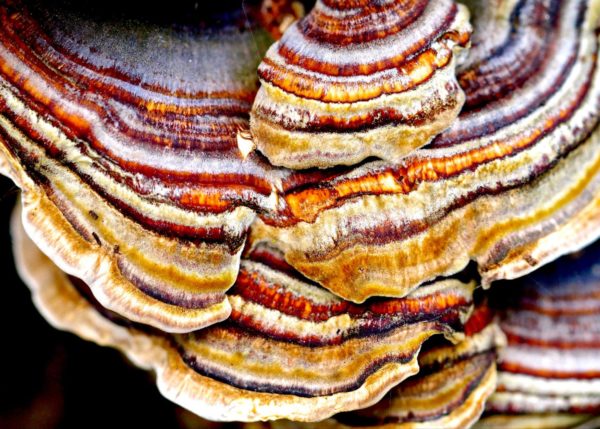
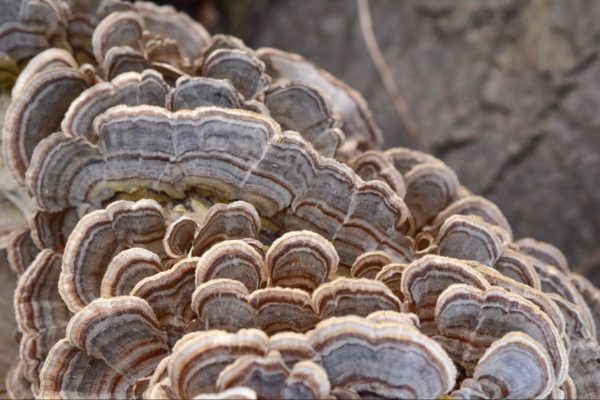
Turkey tail mushrooms (Trametes versicoloralso known ascoriolus versicolor) get their name because they look like a turkey tail. Found throughout the world on dead trees, turkey tails boast an impressive array of health properties.
The ancient texts from China and Japan revere this mushroom for its ability to strengthen health, physically and mentally. Taken over time, turkey tails are thought to extend life and enhance the immune system. It is one of the best detoxifying herbs, has anti-inflammatory properties, and is hepatoprotective.
Modern science has shown that turkey tails sport an array of triterpenes, organic acids and alkaloids that can improve your immune system. But their real star power may come from the polysaccharide krestin (PSK) and polysaccharide peptides (PSP) that you find in this mushroom.
PSK and PSP have powerful immune-boosting properties that stimulate white blood cells to activate and eliminate harmful bacteria, viruses, and other pathogens wreaking havoc on your body. PSK and PSP are so powerful that some countries including China and Japan use it as a complementary treatment for cancer patients undergoing radiation or chemotherapy.
Turkey tails also perform well when it comes to warding off fatigue. That’s because fatigue is a common symptom of a weak immune system.
Traditionally, turkey tails are also often used to help treat jaundice, hypochondriac pain, chronic coughing, asthma, joint inflammation, hepatitis, nephritis and rheumatoid arthritis.
Harnessed by the Mesopotamians, Egyptians, Chinese, and Siberian cultures for over 4,000 years, you can findchaga mushrooms(Inonotus obliquus)anywhere you find birch trees.
Chaga has a storied history, used in shamanic rituals, especially by the Khanty / Oystak peoples. It was also used by the Ainu, the original inhabitants of Japan, for digestive upset and in religious ceremonies. Known as a “Gift from God” by Siberian cultures, chaga mushrooms are used to aid the digestive system and liver, where it can treat hidden pathogens.
If you’re looking for a mushroom packed with nutritional value, then this one’s for you. It’s loaded with b-complex vitamins, vitamin D, potassium, cesium, amino acids, fiber, copper, zinc, iron, selenium, magnesium, and calcium.
And it’s filled with antioxidants that could slow the aging process or reverse signs of it. Chaga can also help reduce chronic inflammation which may help reverse or lessen symptoms caused by other chronic conditions including autoimmune diseases and rheumatoid arthritis.
Like other mushrooms on this list, chaga can also support the immune system.
Suggested Dose:1 tsp of dried, ground mushroom in long steeped tea (8-24 hours), 1-3 cups per day.
Cordyceps
Improves Energy and Endurance – Heart Health – Fights Inflammation
Cordyceps (Cordyceps sinensis) have a long history in Traditional Chinese Medicine and Tibetan Medicine where it’s used to improve energy and endurance, and cure sickness, kidney disease, and a low sex drive.
Cordyceps sound like something out of a sci-fi flick. Instead of growing on trees, fallen logs, on the ground or under leaves, they’re a parasitic fungus that grows on the larvae of insects or certain caterpillars found in China and Tibet.
In the wild, it can actually take up to six years to grow, where it is found along the Himalayan foothills and the highest quality comes from the Tibetan plateau. Today, it’s rare to find cordyceps in the wild—most are grown commercially.
Legend holds that cordyceps were discovered via zoopharmacognosy. Tibetan yak herders observed that the animals who consumed this were stronger, more vital and vigorous, healthier and lived longer.
Traditionally, cordyceps are used to treat low back pain, low sexual desire and potency, chronic cough, wheezing and asthma. They can be made into a stew with duck, chicken, pork, or fish to help address weakness, dizziness, signs of debility and lowered immune resistance.
Dōng Chóng Xià Cǎo, or Winter Worm Summer Grass (as it’s known in Chinese Medicine), is said to be safe to take for long periods and is comparable to Ginseng for its life-extending benefits.
The current science shows some of the potentials of this extraordinary mushroom include anti-aging and anti-tumor properties. Cordyceps have also long been used to bolster energy and endurance improving exercise and performance. And they may also help improve heart health and fight inflammation.
Suggested Preparation Method:Tincture (Dual-Extract), Powdered Extract or Decoction
Suggested Dose:Raw herb for decoction 3-14g, Tincture 2-4 mL
Tremella(Tremella fuciformis) goes by many names. Snow fungus, silver ear, snow ear, white wood ear. It’s mostly found in Asia and tropical regions including Central and South America, Australia, and the Pacific Islands.
Called Bai Mu Er, or “white wood ear” mushroom in China, for centuries the most beautiful women in China used it for skin complexion, suppleness, and radiance and to maintain youthfulness and vitality. That’s because white fungus polysaccharides (found in tremellas) can act as a natural moisturizer as it improves water retention when coated on the skin.
Like other mushrooms on this list, tremella’s potential health benefits may vary. From anti-inflammatory to antioxidant properties, tremella mushrooms may also boost your immune system and improve your brain health.
Traditional medicine has used tremella mushrooms to help treat cough, palpitations, and high cholesterol. It can be useful in treating neurodegenerative disease, cardiovascular disease, obesity, and high cholesterol.
Suggested Preparation Method:Powdered or Liquid Extract, Cooked
Suggested Dose:1-2 full droppers 3-4 times daily, ½ – 1 tsp powdered extract daily, culinary amounts
Porcini
Reduce Inflammation – May Kill Colon Cancer Cells
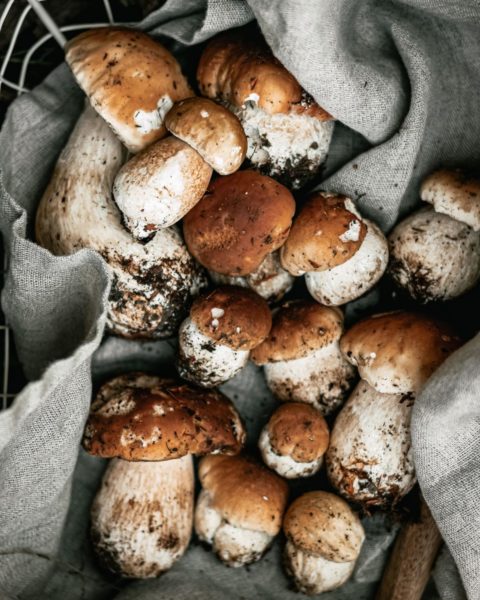
If you’re suddenly envisioning porcinis(Boletus edulis)lightly sauteed with some butter or ghee, you’re not alone. Prized in Italian and French cuisine, known as “King Bolete.”
As delicious as these mushrooms taste, they pack more than culinary punch—they’re high in antioxidants including beta-carotene, ascorbic acid, and lycopene that can help reduce chronic inflammation.
Studies also show that porcini extract may also help kill colon cancer cells,or block the growth and spread of colon cancer.
Adding porcinis to your meals can help benefit weight loss, digestion, immune health, inflammation, are high in antioxidants and more.
Suggested Preparation Method:Cooked
Suggested Dose:culinary amount
Chanterelle
Vitamin D – Brain Function – Immune Boost
You can find the trumpet or funnel-like looking chanterelle mushroom throughout North America, Africa, Asia, and Europe. There are multiple species with different colors but the most common is the golden-yellow, known scientifically asCantharellus cibarius.
Because you often find these mushrooms grown in the wild, they’re usually high in vitamin D, which improves energy levels and bone health. With the golden-yellow chanterelle, you also get bioactive antioxidant carotenoids that help with eyesight. In fact, Chinese Medicine harnessed this herb to treat eye conditions such as night blindness and inflammation.
We’re not done yet. Chanterelles also contain phenolic acids that can help boost the immune system through antioxidants, and anti-inflammatory and anticariogenic properties.
Traditionally, chanterelles were used for their anticarcinogenic, antigenotoxic, anti-inflammatory, antimicrobial, antioxidant, immunomodulant, and vulnerary (used to heal wounds) properties. And they can also help treat respiratory tract infections.
In Latvia, this herb was used to treat infections (Tonsillitis, tuberculosis, respiratory) and treat wounds (abscesses, boils). It is said chanterelles can even treat intestinal worms and also help remove radiation from the body.
It doesn’t attract as much hype as other mushrooms, but Traditional Chinese Medicine has used poria mushrooms(Poria cocos)for almost 2,000 years. And it’s one of the most common remedies prescribed by practitioners to treat wide ranging ailments.
Known asFu ling, poria mushrooms are commonly used in classical Chinese Herbal Medicine formulasused to treat diarrhea, edema, epigastric distention, palpitations, headaches, dizziness, insomnia, restlessness, and forgetfulness.
When combined with the bark of the tree from which it grows, Pinus longifolia, it develops psychoactive properties. It also gets used in meditative arts.
Poria mushrooms also grow in North America where it was harnessed by native tribes as a food and as a healing aid.
Today, you may find it used to treat fatigue, insomnia, nervousness, restlessness, anxiety, tension, fluid retention, and stomach problems. It’s even being studied for its anti-tumor properties that may help fight or prevent certain cancers.
Research is still underway, but poria mushrooms are believed to help fight depression by increasing serotonin and dopamine, lowering inflammation in the prefrontal cortex.
Suggested Preparation Method:Tincture, Powdered Extract or Decoction
Suggested Dose:Raw herb for decoction 9-18g (up to 60g for specific conditions), Tincture 2-4 mL
How To Use Medicinal Mushrooms?
Incorporating mushrooms medicinally into your life is more accessible today than ever before. From extracts to teas and powders, you have choices.
How you use them will largely depend on your preference and lifestyle.
And mushroom medicine is not a one-and-done activity. It’s meant to be used daily (or regularly over time) as a complement to other healthy lifestyle behaviors and possible treatments.
Extract/Tincture
If you’re looking for potency, opt for an extract or tincture.
The terms often get used interchangeably. But both result in a liquid form that has come from harvesting mushrooms, drying them, then using a fluid to extract the properties.
Tinctures usually use drinkable alcohol to pull out the properties, while extracts use water (warm and/or cold).
Extracts are generally thought to have the upper hand over other forms due to the higher concentrations of beneficial properties, includingβ-glucans and triterpenes. But the amount depends on the extraction fluid used. β-glucans are water-soluble, and triterpenes are alcohol soluble.
The best extracts use what’s called adual-process—using water and alcohol to extract β-glucans and triterpenes. And you may find atriple-processthat uses all three – warm water, cold water, and alcohol –to ensure the final products get imbued with the beneficial properties.
Usually, you can take the suggested drops in warm water or directly in the mouth.
Powder
Supplements have exploded in the last decade. So it’s relatively easy to find functional mushrooms in powder form. It comes from harvesting the mushroom, then drying, and finally grinding it.
Often, you’ll find medicinal fungi as pills or a loose powder. Some people pop the capsule on its own. Others may open the pill or take the loose powder and add it to a smoothie, protein shake, hot cereal, or warm beverage.
Some people swear by dissolving powder in a hot liquid such as tea, coffee, cocoa, hot water, or broth.
There’s no hard and fast evidence—it’s mostly preference.
Typically you can find powders for a single mushroom or multiple ones added in one formula.
When you find multiples, it typically has a targeted health benefit like supporting the immune system or improving brain health.
Note: Sometimes you may findpowder extract. It simply means that the mushroom went through an extraction first before undergoing a drying process.
Tea
For thousands of years, people have stepped mushrooms in water and enjoyed them as tea. When you choose the path of tea, not only do you get all the health benefits from the mushrooms, but there’s the spiritual connection and heart opening that comes from the ritual of preparing it.
Sign me up!
If you want to buy your own dried mushrooms and steep them, you certainly can. But you can also find mushroom tea in most health food stores or online.
Some of the more popular mushrooms used medicinally in teas include chaga, turkey tails, reishi, tremella, and lion’s mane. Today, it’s pretty common to find mushroom tea combined with other ingredients to improve the taste.
Finding a flavor that works for you is all about discovery. Try approaching this with curiosity! It’s an adventure finding the mushroom tea that speaks to your body, mind, heart, and spirit.
Decoctions:In Chinese Medicine, it’s traditionally called aTang, which means soup. Decoctions are hot water extracts. Generally, you cover the mushroom (or any herb) with water, bring to a boil (uncovered), then simmer (covered).
With functional mushrooms, you need to simmer at least 40-60 minutes, if not a few hours for harder substances—especially reishi and chaga mushrooms.
The goal is to create a dark colored and strong tasting tea.
This can be drunk as-is, for 1-3 cups per day, or you can use it as a base in soup recipes.
Whole (dried or fresh)
From a nutritional profile alone, everyone should add more mushrooms to our diet.
If you love cooking then adding more edible mushrooms such as shiitake, maitake, chanterelles, lion’s mane and others to dishes can be nourishing and healing.
Depending on where you live, finding whole mushrooms might pose a challenge. Definitely check any local natural food stores, farmers markets, or co-ops. You might hit it lucky and discover some delicious fresh mushrooms that you can sauté, add to soups or stews, or stir fries. You can also look for dried mushrooms that you can reconstitute with warm liquid (water or broth).
When using whole mushrooms, you’ll want to cook them to release the beneficial compounds and properties.
Full disclosure:to really reap all the health benefits and properties of mushrooms, you’ll likely need to use other forms too whether that’s a powder or extract. The other forms give you higher concentrations of all those beneficial compounds and properties, plus convenience. Whereas you would have to eat a lot of mushrooms in order to get the same effect, and for some like chaga, reishi, and cordyceps using an extract is a must unless you plan on preparing them as a tea or decoction yourself.
Definitely add them to your meals, if you can and that’s accessible for you. Don’t stress if it’s not. And still consider using other forms too if you’re gung-ho on using mushrooms medicinally.
Are Medicinal Mushrooms Safe?
Generally, yes, for most people.
If you’re sticking with the recommended doses, following proper preparation methods, and not just traipsing through the woods, picking anything you see and ingesting it, then yes, medicinal fungi are safe for most people.
But the keys here are to make sure you’re:
Buying ingredients from reputable companies
Properly preparing the mushrooms
Using the recommended doses
Monitoring how you feel after taking them
Every person’sbodytruly is different and what works for one person may not work for someone else. So if at any time you feel discomfort, thenstop.
Another failsafe that The Sacred Science team loves is to lean on the experts…herbalists.
They’re an amazing resource and fountain of wisdom. If available to you, they can help you identify the right functional mushroom for your ailment but also the best preparation and dosage.
Some functional health practitioners, naturopaths, acupuncturists, and other health and wellness practitioners may also have training in herbs and using medicinal mushrooms. So check them out too. And if you’re already working with someone, ask if they have experience with functional mushrooms OR if they can recommend someone.
Who Should NOT Take Medicinal Mushrooms?
If you have a mushroom allergy DO NOT try functional mushrooms. Seriously. Stay far away from any and all spores!
For anyone without a known mushroom allergy, before you add this ancient remedy into your life, check to see if there are any common side effects, or potential drug effects.
Like any supplement, medicinal fungi can interact with any other medications or supplements that you might be taking.
And some people with certain conditions will want to avoid certain mushrooms. For instance, the medical community recommends that people with blood disorders, taking blood pressure medication, or on immunosuppressant drugs should avoid reishi.
If you’re interested in bringing mushroom medicine into your life, then do a deep dive. Learn what you can about the mushroom you’re interested in working with, make sure that it’s safe for your health profile, and then start slow, and monitor.
Again, if anything feels off in your body, nix the mushroom and don’t look back. Just move on to the next one. (And this goes for any remedy or healing modality you try!)
Where To Buy Medicinal Mushrooms?
Because they’ve exploded in popularity lately, finding medicinal fungi has become much easier for us no matter where we live. And you don’t have to grow, forage, dry, and grind mushrooms yourself—unless that’s how you roll, then go for it!
Often, you can snag functional mushrooms—fresh, powder, or extract form—by searching at:
Local natural health food store
Vitamin or supplement shop
Online and through reputable sites
Local herbalist or apothecary
Word of warning of foraging:please, do not just pick mushrooms from your yard or in the forest. If you’re interested in learning how to forage, then I highly recommend checking to see if anyone in your local area offers workshops or classes. Foraging for mushrooms is an amazing way to connect with Mother Nature, but only when you know exactly what you’re picking. Stay safe and when in doubt, leave it be.
Tips For Evaluating The Best Mushroom Supplements
With different forms on the market, it’s easy to get overwhelmed by choices. Here’s a few tips that have been passed from sages steeped in using functional mushrooms to The Sacred Science team.
Make sure all products come from the fruiting body
What we know as the mushroom is actually thefruiting bodyof a fungus—known asthe mycelium. We can’t see the mycelium; it lives beneath the surface—be it a log, tree trunk, ground, leaves, wherever mushrooms sprout from.
The mycelium is a network of fibers and cells that look a lot like a ball of twine. It’s the mycelium that absorbs nutrients from its surrounding environment, grows, and communicates. Whereas the mushroom only lives for a few days, the mycelium can live forhundreds of years.
Fun fact: the largest known organism on Earth is the mycelial of honey mushroom (Armillaria ostoyae) in eastern Oregon. It’s 2,384 acres large—that’s about 1,665 football fields.Scientists estimate that it’s about 2,400 years old but could be 8,650 years.
Any supplement or extract that you buy should come from the fruiting body—the mushroom. This is really important because that’s where all the beneficial nutrients, compounds, and properties come from.
Unfortunately, some unscrupulous supplement companies use the mycelium (what grows underneath the surface). Read the ingredient list carefully.
If it says “freeze-dried mycelium,” you may want to think twice. For the rarer mushrooms that often are commercially cultivated like cordyceps, it might be difficult to avoid the mycelium getting included.
Ideally, you want to look for the following phrases:
Extract (fruiting body)
No grain fillers
Pure mushroom extract
Check the extraction process
If you’re interested in an extract or tincture, see if the company explains its process. Most reputable ones will.
Look for “hot water extract,” as that ensures you’re getting the vitalβ-glucans from mushrooms.
Some mushrooms like lion’s mane, turkey tail, shiitake, and maitake only need a hot water extract. But others like chaga and reishi have non-water-soluble compounds, requiring alcohol to extract all the benefits.
So you may see a dualextraction processwhich involves alcoholandwater (either warm or cold).
Check the label carefully
If you can, try to get mushrooms grown organically and that have a high percentage of bioactive constituents (e.g. B-glucans).
Watch for country of origin and substrate used
Many mushrooms can only be found in certain regions or countries–and in some cases, growing them naturally or foraging for them in the wild just doesn’t happen. Many companies will source mushrooms cultivated closer to home.
Reputable companies will tell you exactly where they source their mushrooms from and how. For instance, many will state they’re mushrooms are 100% organically grown in California or another specific location. And they’ll also tell you what those mushrooms are grown on like sawdust, wood, or a specific grain.
Look for any testing reports or certifications
Many high-quality products will feature certifications such as USDA Organic, non-GMO, certified gluten-free, certified vegan. While certifications aren’t 100% foolproof, it does show that the company cares about its reputation and the quality of ingredients enough to pursue a designation.
What Are Some Trusted Brands?
One of the most common questions we get asked at The Sacred Science is to recommend trusted brands. With so many options to choose from today, it’s hard to know what to try. Especially in the supplement industry where standards and quality of the products vary widely.
When it comes to functional mushrooms, The Sacred Science team is lovingFour Sigmatic, which offers a line of mushroom coffee, cacao mixes, and plant-based protein powders and creamers.
We also turn toReal Mushroomswhen we’re searching for the best mushroom extracts.
AndMountain Rose Herbsoffers a wide mushroom selection from whole, dried mushrooms to powders, extracts, and elixirs. Choose from turkey tail, shiitake, reishi, maitake, chaga, cordyceps, and more.
How To Grow Medicinal Mushrooms?
For those curious and inspired souls, yes, you can cultivate mushrooms at home. It takes more effort and planning, but with some patience and knowledge, you can enjoy many mushroom varieties.
Location plays a huge role in successfully cultivating mushrooms. Every mushroom will have its variation, but most prefer a dark, moist, yet cool and humid climate. Some people will grow their mushrooms in basements or under the sink.
Mushrooms also grow on what’s called asubstrate—that’s a surface where mushrooms can get all the nutrients they need to grow. Every mushroom is a bit different here. Some will grow on a log, straw, woodchips, sawdust, shredded newspaper and paper brown bags.
For instance, shiitake, maitake, lion’s mane, reishi, and turkey tail all grow on logs. But each prefers a different tree.
Using a grow kit is a fantastic way to get started too.
If you’re really interested in cultivating your own mushrooms (which is awesome!) then check out theNorth American Mycological Association. They have some excellent resources on getting started.
Paul Stamets, a mycologist and researcher, wrote a phenomenal book on this topic,Growing Gourmet and Medicinal Mushrooms.It’s a terrific resource if you’re interested in beginning to cultivate your own functional mushroom garden.
What Is Magic Mushroom Medicine?
What doAlice in Wonderland,The Smurfs,and Santa Claus have in common?
They were all likely inspired (partly) by psychedelic mushrooms. (I couldn’t talk about mushrooms without at least mentioning this subject!)
In the children’s story,Alice in Wonderland, Alice can eat a mushroom that changes her size.The Smurfsactually look like mushrooms and live in mushroom houses. While it’s been suggested that during midwinter festivals,Siberian shamanswould use fly agaric(Amanita muscaria)mushrooms then use a chimney to enter and exit yurts.
Our fascination with psychedelic mushrooms makes sense when you consider they were a cornerstone in ancient shamanic cultures and shamanic healing.
Today, the association of psychedelic mushrooms with recreational drug use is changing. In shamanic cultures it’s much different. Some shamanic cultures turn topsychedelic mushroomsas powerful healing tools.
Here’s a short video we created with Dennis McKenna on the psychedelic mushroom phenomenon:
For thousands of years, Siberian shamans have used the fly agaric mushroom, while in Meso-America numerous cultures use psilocybin to induce an altered state of consciousness to help heal illnesses on the spiritual, emotional, and mental planes.
Some experts have even hypothesized that we owehuman developmentto magic mushrooms. In his book,Food of the Gods, Terence McKenna, an ethnobotanist, theorized that the human brain tripled in size, and humans gained self-awareness, consciousness, creativity, environmental sensitivity, and information-process abilities because our ancestors ate hallucinogenic mushrooms such as psilocybin.
What these cultures knew and practiced—typically under the guidance of shamans or medicine men/women—our modern world is just catching up.
Despite psilocybin being an illegal drug in the United States, there’s promising research coming out of major institutions includingJohns Hopkins University Medical Schoolthat demonstrate the therapeutic benefits of usingpsilocybinin low doses and in controlled settings under the guidance of a trained and certified professional.
Studiesare showing that psilocybin could help treat depression, addictions to alcohol, drugs and cigarettes, and cancer and end-of-life depression and anxiety.
Right now, it’s illegal to use psilocybin to treat conditions, but it’s definitely something to watch, and it could follow in the MDMA footsteps in the coming years—so stay tuned!
Want To Learn More About Medicinal Mushrooms?
We’ve just skimmed the surface in this guide, but the world of medicinal fungi is vast. To learn more about this ancient healing path and how you can bring this magic into your life, check out this docuseries that we’ve created atThe Sacred Science:
Introducing the magic of functional mushrooms into your life can be healingandfun. And when you bring mushroom medicine into your life, you’re also creating a deep bond with your ancestors and the ancient wise ones that have also used these remedies.
As any traditional healer would tell you, that sacred connection holds powerful medicine too.
May you awaken and feel restored through the healing power of mushrooms.
Stay Curious,
Nick
What’s your experience using medicinal mushrooms? We want to hear from you! Share which ones you’ve tried (or are about to), how you prefer to use them, and any other tips that can help your fellow travelers on their quests.
Stamets, Paul, and Heather Zwickey. “Medicinal Mushrooms: Ancient Remedies Meet Modern Science.”Integrative medicine (Encinitas, Calif.)vol. 13,1 (2014): 46-7.
Weigand-Heller AJ, Kris-Etherton PM, Beelman RB. The bioavailability of ergothioneine from mushrooms (Agaricus bisporus) and the acute effects on antioxidant capacity and biomarkers of inflammation. Prev Med. 2012 May;54 Suppl:S75-8. doi: 10.1016/j.ypmed.2011.12.028. Epub 2011 Dec 31. PMID: 22230474.
Michael D. Kalaras, John P. Richie, Ana Calcagnotto, Robert B. Beelman. Mushrooms: A rich source of the antioxidants ergothioneine and glutathione. Food Chemistry, Volume 233, 2017, Pages 429-433. ISSN 0308-8146,https://doi.org/10.1016/j.foodchem.2017.04.109.
Valverde, María Elena et al. “Edible mushrooms: improving human health and promoting quality life.”International journal of microbiologyvol. 2015 (2015): 376387. doi:10.1155/2015/376387.
Venturella, Giuseppe et al. “Medicinal Mushrooms: Bioactive Compounds, Use, and Clinical Trials.”International journal of molecular sciencesvol. 22,2 634. 10 Jan. 2021, doi:10.3390/ijms22020634.
Wasser SP. Medicinal mushrooms as a source of antitumor and immunomodulating polysaccharides. Appl Microbiol Biotechnol. 2002 Nov;60(3):258-74. doi: 10.1007/s00253-002-1076-7. Epub 2002 Sep 10. PMID: 12436306.
Patel, Seema, and Arun Goyal. “Recent developments in mushrooms as anti-cancer therapeutics: a review.”3 Biotechvol. 2,1 (2012): 1-15. doi:10.1007/s13205-011-0036-2.
Moradali MF, Mostafavi H, Ghods S, Hedjaroude GA. Immunomodulating and anticancer agents in the realm of macromycetes fungi (macrofungi). Int Immunopharmacol. 2007 Jun;7(6):701-24. doi: 10.1016/j.intimp.2007.01.008. Epub 2007 Feb 14. PMID: 17466905.
Jayachandran, Muthukumaran et al. “A Critical Review on Health Promoting Benefits of Edible Mushrooms through Gut Microbiota.”International journal of molecular sciencesvol. 18,9 1934. 8 Sep. 2017, doi:10.3390/ijms18091934.
References (continued):
Sabaratnam, Vikineswary et al. “Neuronal health – can culinary and medicinal mushrooms help?.”Journal of traditional and complementary medicinevol. 3,1 (2013): 62-8. doi:10.4103/2225-4110.106549.
Yao, C., Wang, Z., Jiang, H.et al.Ganoderma lucidumpromotes sleep through a gut microbiota-dependent and serotonin-involved pathway in mice.Sci Rep11,13660 (2021).https://doi.org/10.1038/s41598-021-92913-6.
Cheng CH, Leung AY, Chen CF. The effects of two different ganoderma species (Lingzhi) on gene expression in human monocytic THP-1 cells. Nutr Cancer. 2010;62(5):648-58. doi: 10.1080/01635581003605516. PMID: 20574926.
Gao Y, Zhou S, Jiang W, Huang M, Dai X. Effects of ganopoly (a Ganoderma lucidum polysaccharide extract) on the immune functions in advanced-stage cancer patients. Immunol Invest. 2003 Aug;32(3):201-15. doi: 10.1081/imm-120022979. PMID: 12916709.
Wang X, Zhang Z, Zhao M. Carboxymethylation of polysaccharides from Tremella fuciformis for antioxidant and moisture-preserving activities. Int J Biol Macromol. 2015 Jan;72:526-30. doi: 10.1016/j.ijbiomac.2014.08.045. Epub 2014 Sep 4. PMID: 25194971.
Lemieszek MK, Ribeiro M, Guichard Alves H, Marques G, Nunes FM, Rzeski W. Boletus edulis ribonucleic acid – a potent apoptosis inducer in human colon adenocarcinoma cells. Food Funct. 2016 Jul 13;7(7):3163-75. doi: 10.1039/c6fo00132g. PMID: 27302173.
Lemieszek MK, Ribeiro M, Marques G, Nunes FM, Pożarowski P, Rzeski W. New insights into the molecular mechanism of Boletus edulis ribonucleic acid fraction (BE3) concerning antiproliferative activity on human colon cancer cells. Food Funct. 2017 May 24;8(5):1830-1839. doi: 10.1039/c6fo01626j. PMID: 28401225.
Yun-Ju Huang, Nai-Yuan Hsu, Kuan-Hung Lu, Yu-En Lin, Shih-Hang Lin, Yun-Sheng Lu, Wei-Ting Liu, Mei-Hsing Chen, Lee-Yan Sheen. Poria cocos water extract ameliorates the behavioral deficits induced by unpredictable chronic mild stress in rats by down-regulating inflammation. Journal of Ethnopharmacology, Volume 258, 2020. ISSN 0378-8741,https://doi.org/10.1016/j.jep.2020.112566.
In a world awash in stress, anxiety, depression, and anxiety-related disorders, many of us are looking to ancient healing practices for help.
One natural and proven-effective treatment is a little-known category of herbs callednervines,whichhelp to modulate—or balance—our nervous system.
Despite our world being filled with many more conveniences and comforts, security and safety, than ourancestors experienced, it has pushed many of us to the brink mentally, emotionally, and spiritually.
And as a result, modern medicine and Western doctors, especially, have turned us toward certain medications that are occasionally effective, sometimes ineffective, but regardless, are certainly laden with side effects—some mild and others very serious.
For some of us, using prescription medications is still a path we need to follow—zero judgment here.
That said, many of us are looking foreffective alternativeswith few—if any—side effects. In this search for healing, The Sacred Science Team and I returned to our ancestral roots, to ancient medicine and folk wisdom to find the answers—and relief—we so desperately seek.
Thankfully, there’s a category of medicinal herbs called nervines, which can help to manage (and even heal):
Mild to moderate stress
Anxiety
Depression
Seep disruptions
Pain
Gastrointestinal discomfort; and
Other ailments
Science is just beginning to understand how beneficial nervine herbs can be for those of us suffering from ailments rooted in a dysfunctional nervous system. Oftentimes, all it needs is some calming and rest, or just the opposite—a good jump start.
As we’ve discussed so many times atThe Sacred Science, what I’m about to present isn’tnewinformation—it’s powerful folk medicine that has been swept under the rug and forgotten, but definitely not lost.
I still remember the absolute awe I felt when The Sacred Science team filmed at the New York Botanical Gardens for ourRemedydocuseries. There, Michale Balick graciously allowed us access to the Merz Library and its rare books collection where we saw centuries-old manuscripts, written on animal leather that chronicled different herbs, detailed drawings of them, and instructions on how to use them and what to use them for.
Our ancestors understood herbs and the healing effects they can have on our mind and body, and they regularly sought relief fromnervinesto help relax their minds, regulate emotions, improve sleep, fight fatigue, relieve pain, and more.
Today, we’re delving back into this treasure trove of knowledge on nervines, moving it forward to where it always has belonged—as an incredible tool to help you regain your health and life.
In this guide, we’re rediscovering and sharing the story of nervines—what they are, how they impact your body, what conditions they can help treat, the best and most researched nervines, how to use them, where to find them and much, much more.
What Is A Nervine?
Nervines are a special category of herbs that help modulate—or bring into balance—our central nervous system and brain.
Studiesare showing that when we use nervines, they can have a substantial impact on our nervous system resulting in less stress and anxiety, better moods, and overall health and wellbeing. Even better, they come without the serious side effects that we find many prescriptions have.
It’s believed that nervines can have immediate physiological effects on the body when we’re under stress, as well as long-term positive impacts too.
I think of nervines like I do healthy eating or moving my body. I feel good right away, while simultaneously I know I’m building strength and resiliency for my long-term health.
And that’s what nervines do. They help us with acute challenges while also strengthening our nervous system, so it can remain in harmony and regulate itself better when we face future stress.
While nervines are best known as aides for our nervous system, many offer other positive health benefits too. For example, chamomile and lemon balm (both nervines) are also fantastic digestive aids and help to balance your microbiome.
Bonus:many of the other health benefits that nervines offer our bodies will indirectly impact our nervous system.
Everything in your body—including your mental, emotional, and spiritual self—is connected.
For instance, we’re learning how the health of our microbiome plays a massive role in our brain health, emotional regulation and moods, and our immune system. So by taking care of your gut health, it helps restore and balance your nervous system too.
What Are Nervines Used For?
Folk healers have used nervines for thousands of years tohelp treat various ailmentsthat affect the central nervous system.
While modern science has yet to fully catch up with the research on nervines, we know from herbalists which herbs have historically been used to help support, replenish, and stimulate the nervous system and can help treat the following conditions:
Anxiety
Stress
Depression (mild to moderate)
Sleep disturbances
Fatigue
Indigestion
Nerve pain/neuropathy
Concentration issues
Panic
Some nervines can also boost brain performance and are known as nootropics. So not only will your nervous system become more balanced, your brain performance like memory and concentration can get an extra kick.
How Are Nervines Classified?
In traditional medicine, herbalists and natural medicine practitioners categorize nervines differently based on the three main effects they have on the nervous system including:
Nervine Relaxants
Nervine Tonics/Trophorestoratives
Nervine Stimulants
1. Nervine Relaxants
Some nervines are considered relaxants because they do exactly what their name says—they calm and soothe the nervous system. This helps induce a relaxed state of being, allowing the body to release muscle tension or stress, and promoting better moods, mental clarity, cognitive function, and digestion.
Nervine herbs are particularly adept at helping people whose nervous systems are often triggered into, or often caught, in thesympathetic stateof fight, flight, or freeze. In this state, stress hormones including cortisol and adrenaline constantly pump through your body, keeping you in an elevated and heightened survival state.
There is nothing inherently wrong with the sympathetic state—in fact, it’s how humans have survived and avoided death. But our bodies were never meant to live for prolonged periods in this state.
Which is why nervine relaxants can be very effective for us today. They help our nervous system shift out of the sympathetic state into theparasympathetic state,which slows our heart rate, lowers our blood pressure, and allows our body to shift into a rest state where it also digests its food and heals from any injuries.
Nervine Sedatives
In high doses, some nervine relaxants can become sedatives—it slows down your nervous system, which reduces irritability, excitability, and nervousness. This is the herbal chill-pill category of nervines.
Nervine Hypnotics
Part of the relaxant family are herbs that are stronger than nervine sedatives, which contain certain alkaloids that help induce sleep—versus other nervine relaxants that simply calm the nervous system yet simultaneously leave you with mental clarity and concentration.
Some health practitioners may recommend nervine hypnotics when their patient struggles with insomnia or sleep disturbances. These nervines are excellent to take before bed or when you intend to rest (rather than first thing in the morning, or before you get in a vehicle).
2. Nervine Tonics (or trophorestoratives known to replenish tissue)
We know that our bodies wear down as our cells and tissue get damaged.
There’s nothing we can do about that, right?
Wrong.
There are specific nervines that actually help to restore and replenish the tissue in our nervous system.
How cool is that?!
Nervine tonicsdo just that and are particularly helpful when our nervous system has been living in a chronic stress, parasympathetic state, for long periods. Trauma, chronic stress, and illness are just some of the conditions that can really damage the nervous system and which nervine tonics can help revitalize.
Nervine tonics are great to use over the long-term to help rebuild and restore your nervous system.
Many nervine tonics also offer other health benefits like helping the nervous system relax and quiet nerve pain.
3. Nervine Stimulants
When we talk about our nervous system, it’s pretty common to focus on the stress response and anxiety state—which is akin to our nervous system being jacked up and on alert. In this state, the best treatment for our nervous system is to chill, to relax and slow it down.
This state gets a lot of attention, partly because we live in a world where it seems our nervous system constantly gets triggered to overreaction and over stimulation.
But sometimes our nervous system can also veer into an underactive state where we experience low energy and feelings of depression and lacking motivation. The best thing for our nervous system when this occurs can actually be to rev it up.
That’s where nervine stimulants take the prize. These special herbs help activate the nervous system, leading to more energy and more uplifted feelings.
What’s The Difference Between A Nervine and Adaptogen?
If you think that nervines sound an awful lot like adaptogenic herbs, you’re right. They’re very closely related, both helping the body better manage its response to stress.
The difference lies in how the two interact within your body and what systems they support.
Nervines are believed to directly support and nourish the central nervous system. Yes, they have extra benefits in the body, but they’re all about finding balance in your nervous system—whether that’s your system needing to relax, replenish, or stimulation.
Adaptogens like reishi, ashwagandha, or ginseng are believed to“read” your bodyand its stress response, recognizing what systems need extra support.
That means adaptogenic herbs positively influence more than just your central nervous system, though they can impact that system too. Depending on what your body needs, the adaptogen may support your endocrine system and your hormones, or your immune system.
What Are The Best Nervines?
Selecting the best nervine to use often comes down to what your nervous system needs most—relaxant, hypnotic or sedative, tonic, or stimulant—your personal taste and preference, and any other conditions like poor digestion or insomnia that you may want extra support for.
Below you’ll find some of the top, most well-researched, and commonly used nervines in each category along with suggested doses and preparation methods based on traditional herbalist recommendations.
NOTE: If you take over the counter or prescribed sleeping aids, DO NOT take nervine herbs without consulting your doctor or health care practitioner. You’ll want proper herbal guidance to avoid side effects.
The Top Nervine Relaxants
If your nervous system feels like it’s on overdrive, then consider reaching for one of these nervine relaxants to help bring more peace and calm to your mind and body.
Catnip(Nepeta cataria)
Native to Central Europe and found throughout Canada and the United States, catnip often gets associated with our feline companions, but it has tremendous benefits to us humans too. Part of the mint family, Native American tribes have long turned to catnip to help ease muscle spasms, digestive cramps, and infant colic.
As an added bonus, catnip can also support the immune system, acts as an insect repellent, and it’s good for helping to treat fever, constipation, stomach aches, insomnia, and hyperactivity.
Suggested Dose:
Tincture: ⅛ – ¼ tsp every hour for fevers
Infusion: 5-10g of dried herb per dose, taken three cups daily
Chamomile(Matricaria chamomilla)
Known as “the physician’s plant,”chamomilehas been used as a medicinal staple for thousands of years. Ancient Egyptians used this herb to treat fevers and colds (it was also dedicated to the Sun God, Ra), while ancient Romans used it for its antibacterial and relaxation properties.
Safe for infants, children, and elders, chamomile is truly a must-try when your nervous system needs calming. This species of the daisy flower soothes agitation, digestive issues, excitability, insomnia, anxiety, depression, allergies and food sensitivities, heart palpitations, menstrual complications, skin irritations, and nervousness.
Suggested Dose:
Infusion: 2-3 g dried herb per dose, 1 cup 3-4X day,
Tincture: 1-4 ml, 3x/day
Hops(Humulus lupulus)
Used in beer since at least the Middle Ages, when a French monk left instructions for brewing beer with hops in 822 AD, this herb can be found in Asia, Europe, and North America.
While it’s understandable if you associate hops with beer, it has a storied medicinal history too.
It was commonly used in wound healing, as a digestive aid, diuretic, and relaxant. Hops can help support your nervous system deal with stress, anxiety, insomnia, muscle spasms, tension, nerve pain, menopause, and menstrual cramps.
Suggested Dose:
Capsule: up to 500 mg
Infusion: 1200 mg
The Top Nervine Sedatives and Hypnotics
If your mind is on overdrive, your thoughts constantly whirling, and you find it impossible to slip into a relaxed state for sleep, then you may want to consider using these nervine stimulants that can also act as sedatives and in high doses, hypnotics.
Just note that these herbs often leave people very drowsy, so standard precautions apply here. No operating heavy equipment or machinery. Don’t get behind the wheel of a vehicle. Don’t use first thing in the morning before heading to work. And don’t make any major life decisions while using herbs in this category.
Instead, make sure you’re in a comfortable and safe location and that it’s okay if you fall asleep. You may also want to try these nervines before sleep and when you don’t have to be somewhere the next day—just in case they leave you feeling a little groggy when you wake.
Blue Vervain(Verbena hastata)
Perhaps one of the most sacred of herbs on this list. Druids, Egyptians, Greeks, and Romans all used blue vervain in ceremonies. It is said that the Dakota word for blue vervain translates to “medicine,” while the Omaha and Ponca tribes called blue vervain, “herb medicine.” And legend holds that the wounds of Jesus were treated with this herb when he was brought down from the cross.
Native to the Americas, Mediterranean, and the Near East, blue vervain has traditionally been given to frantic, uptight personalities who make lists, over-achievers who don’t ask for help, and workaholics, most likely due to itsanti-anxiety and calming properties.
Blue vervain has many potential health benefits that can also help treat anger, muscle spasms, digestive disturbances, mood disorders, upper body tension (in the neck and shoulders, menstruation pain,inflammationdue to fluid retention, and it mayprotect nerve cellsin the brain.
It’s also been used as a long-term tonic for anxiety.
Suggested Dose:
Tea: 1 cup 3x day
Energetic (or tiny, microdose versus a medicinal dose): 5-10 drops of tincture 3x per day
Glycerite extract: 1-5 mL 3-4x day
Kava(Piper methysticum)
Known to treatanxiety, pain, insomnia, stress, muscle tension, asthma, menstrual symptoms, andinsomnia—especially when it’s linked to anxiety.
We can trace the use of kava to the Pacific islands. Used before recorded history, kava held a starring role as a social beverage promoting fellowship and as an “icebreaker” during informal engagements and weddings.
In the South Pacific, kava was also used sacrificially and by tribal wisdom keepers to connect with the spiritual world.
Its traditional preparation methods are a bit unusual by modern standards. The kava root would be chewed, then spit out and infused into water or coconut milk, which would then be strained and consumed at sunset and before dinner.
Suggested Dose:
Tincture: ½ – 2 mL 1-4X day
Infusion: 2 tsp in 8 oz for 10-20 mins 1-3 cups X day
Warning:DO NOT use if pregnant or while breastfeeding
Potential Side Effects:DO NOT USE if taking benzodiazepines or antidepressants
Lavender(Lavandula angustifolia)
Native to Europe, Africa, and the Mediterranean, ancient Egyptians used lavender in mummification, perfume, and incense, burning the latter during childbirth to promote peace and tranquility.
This aromatic herb is regularly used to calm the nervous system, without leaving you feeling drowsy or tired.Studieshave found that when used as an essential oil in aromatherapy or as a topical ointment or cream, lavender can help treat anxiety and anxiety disorders, and relax muscles.
It’s believed that lavender has other healing properties including antidepressant, antimicrobial, diuretic, pain relief, and can act as an insect repellent.
Suggested Dose:
Infusion: 1 tsp per cup, 3X day
Lemon Balm(Melissa officinalis)
Considered an herbal “cure all,” lemon balm’s use has been widely recorded throughout the ages.
Ibn Sina, known in the West as Avicenna, was one of the most prominent physicians, astronomers, and philosophers of the Islamic Golden Age, recommended using lemon balm to treat melancholy and “make the heart merry.”
While Paraclesus, a Swiss physician and alchemist of the 1500’s, believed lemon balm to be an “elixir of life,” increasing strength and promoting longevity.
Besides its antiviral and antioxidant benefits,studiesshow that lemon balm can help treat depression, improve moods, cognitive performance and memory, and reduce anxiety and stress.
This lemon-scented herb, from the mint family, is also known to help calm restlessness, treat insomnia and sleep disorders, and it may help as a mild pain relief, easing indigestion, nausea, menstrual cramps, and headaches.
Suggested Dose:
Capsule: 250 – 500mg per day
Passionflower(Passiflora incarnata)
Native to tropical and subtropical regions in North and South America, passionflower is ideal for people who need to calm the heart and promote feeling grounded. Its recorded use traces back to the Aztecs who turned to the herb for pain relief and as a sedative.
Native American tribes also used the passionflower root as poultice for boils, cuts, and inflammation.
Today, herbalists often recommend passionflower to help treat pain, nerve pain, hyperactivity, high blood pressure,anxiety,insomnia, restlessness, viral infections, circular thinking, depression, and inflammation.
Suggested Dose:
Infusion: 1 cup 2-3x day
Valerian(Valeriana officinalis)
From the word,valere, which means “to be strong” or “to be well,” valerian is native to Europe and Western Asia, with other medicinal species found in India, the Himalayas, and North America.
“Nature’s valium” has been used as a remedy foranxiety, epilepsy, andinsomnia. Even the Greek physician, Hippocrates used to prescribe valerian for insomnia.
Traditional medicine has used valerian to help move blood, increase circulation, lower blood pressure, relax muscles (stopping ticks and twitches), warm and relax the stomach and GI tract, and help people struggling with an overactive and busy mind, and linear or circular thoughts.
Suggested Dose:
Tincture: 2-6 mL
Raw herb (dried herb): 3-9g
Topical: compress, infused oil, essential oil
The Top Nervine Tonics (Trophorestoratives)
Albizia(Albizia julibrissin)
Native to southern and eastern Asia, the albizia tree is known as “The Tree of Happiness.” For centuries, its flowers, fruit, seeds, root, bark, and leaves have been used in folk medicine to treat an array of ailments.
Studiesshow that it helps relieve pain, stress, anxiety, depression, insomnia, and grief. And it’s believed to help improve memory and irritability.
Suggested Dose:
Raw herb: 4.5 – 9g
Brahmi(Bacopa monnieri)
The “Herb of Grace” has been used for over 3,000 years in Ayurvedic medicine, and is named after the Vedic God of Creation, Brahma—who created the universe with his thoughts while in deep meditation.
Native to Southern India, brahmi—also known as bacopa—is a nootropic, which helps enhance memory and cognitive function.
Studieshave shown that brahmi can help various ailments including brain injury and strokes, insomnia, nervous breakdown, debility, anxiety, epilepsy, and to promote longevity and improve brain function, especially memory and concentration.
It can also be used topically to relieve joint pain and nerve pain. Brahmi is also mildly sedative.
Suggested Dose:
Tincture: 5-13 mL
Raw Herb: 5-10g raw herb
Gotu Kola(Centella asiatica)
A long time ago, in Sri Lanka people saw the wise elephant, known for its intelligence and long life, eating the gotu kola in the wild. If the wise elephant ate the plant, then it stands to reason that our ancestors believed it benefited them too.
Gotu kola has since been called, “a miracle elixir of life.” Native to Sri Lanka, South Africa, Central and South America, Madagascar, and tropical and subtropical Asia, in Ayurveda it’s known as a mental rejuvenator.
When taken, gotu kola may help treat jaundice, sores, boils, sore throat, pink eye, traumatic injuries, abdominal pain, night blindness, eye inflammation, cataracts, glaucoma, skin eruptions, urinary tract infections,stress and anxiety, anddepression.
As a nootropic, it helps alleviate mental strain, and its sedative properties help promote relaxation.
Suggested Dose:
Raw Herb: 3-5g
Fresh Herb (still containing majority of water and needs immediate prep): 15-30g
Milky Oats(Avena sativa)
Prone to anxiety? Feeling overburdened, stressed, and/or burned out? Dealing with trauma and/or addictions?
If any of these ailments have you in their grasp, then you may want to consider working with milky oats. It can act as a relaxant or a stimulant. And as a nervine tonic,studiessuggest milky oats can improve cognitive function, and possibly moods while also potentially protecting against stress—especially when used for short durations (not over the long term).
When taken, milky oats may also help with exhaustion, infertility, lack of sexual libido, heart palpitations, and mental and muscular feebleness.
Suggested Dose:
Infusion: 1 tbsp per cup, 3X day
Tincture: 3-5 mL per day
Skullcap(Scutellaria lateriflora)
Used traditionally in Chinese and Native American medicine, skullcap acts as a sedative, and to treat anxiety and convulsions.
The skullcap is similar to aspirin and traditional medicine has turned to it to help relieve diarrhea, jaundice, fever, painful urination, cough, sores and swelling andwounds, headache, red eyes, hypertension, irritability, anxiety, and pain.
It’s also believed toremove toxins, reduce cholesterol, and has potential anticancer properties. Somestudiesshow that the skullcap has antibacterial and antimicrobial properties, while otherstudiesdemonstrate that it may also boost mood.
Suggested Dose:
Raw herb: 3-8g
Tincture: 2-4 mL
The Top Nervine Stimulants
Sometimes the best support we can give our nervous system is a jump start. When you’re feeling low energy or your moods are low and you need uplifting, then consider embracing nervine stimulants to give your nervous system the extra juice it needs.
It’s worth noting that most of the nervines in this list contain caffeine. That’s best consumed in the morning—not in the afternoon or evening, as it can interfere with sleep.
Coffee(Coffea arabica)
Coffee usually gets a bad rap. But that’s largely because in our modern world, most of us overuse it, robbing coffee of its medicinal benefits when used infrequently and in small doses.
Many folk medicines routinely employ coffee medicinally.
Native to Ethiopia, coffee sprang from what we considerthe Arab regiontoday. Grown in hot climates found in Central and South America, Africa, and the Middle East, coffee held a sacred place in the Sufi religion where it was used to promote wakefulness and trance-link states during ceremony.
Even coffee houses began as an Arab concept, where people gathered and socialized, enjoying small cups of coffee.
As a nootropic and stimulant, coffee has antioxidant properties, prevents neurodegeneration, stimulates the liver, regulates blood pressure and blood glucose, acts as diuretic, and relieves altitude sickness.
The key with coffee is to use it sporadically so that you get the benefits without the addiction or without building up tolerance levels so it loses its effectiveness.
Suggested Dose:
Hot water extraction: 2-6 cups per day, or 6-18 grams
Kola(Cola vera)
Native to West Africa, the kola nut is the seed of the kola tree, which can grow to 40-60 feet high. Kola extract is even used in Coca-Cola and Pepsi drinks.
Traditionally chewed for endurance and euphoric effects, and presented to esteemed guests and chiefs, kola contains theobromine (same as in Cacao), which opens the blood vessels and bronchial tubes—so it’s literally a heart and lung opener.
Each kola nut contains some serious caffeine levels. One nut is equivalent to two cups of coffee.
Kolahas been known to help counteract fatigue, aid digestion, suppress hunger and thirst, boost intellect, and is a mild mood enhancement.
Suggested Dose:
Tea: 1-2 tsp, 1-3X per day
Tea(Camellia sinensis)
White, yellow, green, oolong, and black teas are harvested from a species of evergreen shrubs or small trees.
Legend holds that over 5,000 years ago, Ancient Chinese Emperor Shen Nong discovered tea when some leaves blew into his cauldron of boiling water and he noticed the pleasant aroma. Drinking some of the strange concoction, the Emperor said he felt this herb investigating his body and stimulating, and awakening his senses.
In Asia, a tea ceremony is a special ritual of brewing and drinking this sacred herb, that is said to help treat fidgeting, thirst, obesity, nausea, vomiting, indigestion, and headaches.
Fermented and processed black and oolong teas are gentler on the stomach than green tea.
Suggested Dose:
Raw herb: 3-12g
How To Use Nervines?
Like many herbs, how you choose to prepare them depends on many factors including your personal preference, convenience, and budget.
Below are some of the most common ways that people use nervines today.
Nervine Cream
Many of the nervines listed above like lavender also are used topically. Nervine creams can be helpful if you’re struggling with pain, especially nerve pain.
Nervine Essential Oils
Researcherslike those at Johns Hopkins are uncovering the healing benefits that essential oils and aromatherapy can have, especially for treating anxiety and depression.
Fortunately, many nervines can also be used in oil form, which you can inhale using a diffuser or out of the bottle. Some essential oils you can dilute with water and apply a small amount directly onto your skin.
Nervine Raw Herbs
Raw means dried herbs, which are commonly used in teas, but you can also use nervines in this form to make a tincture. You can also make a tea or tincture and then use the raw herbs to make other products like balms and creams.
Nervine Fresh Herbs
You don’t always have to wait until herbs dry to extract their healing powers. Fresh herbs are used very much like raw herbs with the main difference being dosing. If you use fresh herbs, you need to use 2-3x as much as you would for the dried herbal dose.
Fresh herbs are good for making teas and oils (infused and essential). If you’re into gardening or foraging, you can also seek fresh herbs to dry and store.
Nervine Tablets or Supplements (dry powder)
Supplements have become hugely popular and you can find many of the nervine herbs in capsule form that you can take as a supplement in a capsule with water.
Some nervines may also come in tablet form—those may be chewable and others you would dissolve on your tongue.
Nervine Tea
Teas are the most common and a simple way to introduce nervines into your daily routine. Many of the nervine herbs listed above can be purchased in tea form, or you may find tea blends.
You can also prepare your own teas by steeping raw nervine herbs or fresh ones in water.
Nervine Tincture
Tinctures are made by taking the nervine and submerging it in alcohol and leaving it to soak for weeks. This method extracts the valuable healing properties of the nervine, leaving you with a tincture.
Tinctures are usually used by placing a few drops in warm water or taken orally.
Are Nervines Safe?
Generally, yes, especially when taken at low doses, but it never hurts to check with your health practitioner or to research a specific nervine before you begin taking it. Like any herb, some may interact with other medications you might be taking, so you’ll want to double check that the one you’re adding is right for your body.
Some nervines may also cause side effects like headaches, diarrhea, drowsiness, stomach aches, or an elevated heart rate. This is why you should always start with low doses.
And if you’re particularly sensitive or worried about a side effect, then start by adding one nervine first before blending multiple ones. That way you can closely monitor your body for any changes and you’ll know what herb was the culprit. So do your best to tune in and notice how your body reacts (or doesn’t) when you begin exploring healing with nervines.
Also, some herbs are meant to be used only for brief periods—they’re not intended for prolonged or daily use. This is just another reason to thoroughly investigate a particular herb before adding it to your routine.
This is just standard advice for any herb that you’re considering incorporating into your healing journey.
Are Nervines Safe During Pregnancy?
Generally, yes, but before adding any new supplement to your life, it’s always important to consult your physician or health provider, and/or do some digging to find out if there are any known side effects, or if you should avoid a specific nervine while pregnant.
Where To Buy Nervines?
One of the many reasons I love nervines is that they’re generally accessible, affordable, and easy to add to life. You can find many nervine herbs at your local natural or health food store, a co-op, or online.
For online purchases, The Sacred Science team regularly turns to Mountain Rose Herbs for nervines. They offer different forms that can suit your personal preferences and price points including dry, capsules, extracts, and combination extracts (multiple herbs blended into one formula).
And don’t discount consulting the pros. Many herbalists, naturopaths, functional medicine practitioners, and acupuncturists routinely recommend nervines to their patients and they can be a great resource to help you determine which nervines to try.
Tips To Begin Healing With Nervines
The beauty of working with nervine herbs is that you can start incorporating them ASAP into your daily regiment. As with most herbs or healthy lifestyle changes, it can take some time before you see any effects.
One of the most effective practices you can use to gauge how your body responds to a nervine is to keep aNervine Journal.
Here’s how it works:
Days 1-3: Get a Baseline.
Pick your #1 fix that’s your chief complaint or the reason that you’re using a nervine. Some examples may include: irritability, nervousness, stress, low-energy, racing thoughts.
Then on a scale of 1-10, rate your #1 fix, mood, energy, emotions, digestion (eating and eliminating), pain, and brain performance like focus, concentration, memory, and problem-solving. Do this when you wake up, before and after every meal, at midday, and before bed.
This will give you your baseline so you can tell if the nervine helps alleviate and improve your #1 condition and overall health. It’ll also help you see if you have an adverse reaction too.
Days 4-28: Add the Nervine and keep scoring.
Now that you have a baseline for how you feel, then add the nervine into your daily routine starting at the low end of the dose suggestions and progressing incrementally every 1-2 days until you’ve hit the dose range limits OR your symptoms go away or you start experiencing the desired benefit.
Every day, continue monitoring and tracking your #1 fix, mood, energy, emotions, and focus/concentration on a scale of 1-10, when you wake up, before and after every meal, at midday, and before bed.
Within 1 day to 2 weeks, you should start seeing some improvement in the #1 fix and throughout the body. If NOT, then change the herb, change the dose, or add another herb.
If you experience ANY undesired effects, STOP taking the herb or reduce the dose immediately.
Each person is unique, and dosing ranges are generalized. Use your best discretion when exploring herbal dose ranges tailored to each person.
Go slowly, and keep monitoring.
As always, you can ALWAYS seek guidance from a trained professional like an herbalist or health practitioner trained in herbalism or who uses this medicine to treat their patients.
You can safely take most nervines for long periods–daily or near-daily for 6 months to years. But check the recommendations for each nervine individually before using.
How To Learn More About Nervines?
Bringing the healing power of nervines into your life can have transformative effects on your mental, emotional, physical, and spiritual healing. In this guide, I’ve given you the basics that will, hopefully, inspire and ignite you to delve deeper into this phenomenal category of herbs.
If you want to learn more about nervines and how they can help you on your healing journey, then check out these other resources:
Nervine herbs are a part of what we call, sacred plant medicine—the kind of medicine that the ancient wise ones used to help restore balance in the mind, body, heart, and spirit. Plant medicine is needed more than ever, given that we’re living during a time when the pace and intensity of life, and the unrelenting stimulation that’s coming at us, is non-stop.
While it’s vitally important for us to constantly check in and evaluate where and how we’re spending our time and energy, it’s equally important to make sure we use every aid and tool at our disposal to help support our nervous system.
The more we take care of our nervous system, the more resilient it will be in the face of stress.
May these nervines help to ease and regulate your nervous system, leaving you feeling restored, revived, and reawakened to this extraordinary experience we call being human.
Stay Curious,
Nick
Have you used nervines? How have they helped you? We want to hear from you! Share how you’ve used nervines and any changes that you’ve noticed in your life in the comment section.
REFERENCES:
Abascal, Kathy & Yarnell, Eric. (2004). Nervine Herbs for Treating Anxiety. Alternative and Complementary Therapies. 10. 309-315. 10.1089/act.2004.10.309.
Tierra, Michael. The Way Of Herbs. Pocket Books: NY, 1998.
Holmes, Peter. The Energetic Of Western Herbs, Vol 1. Snow Lotus Press: CA, 2007.
Holmes, Peter. The Energetics Of Western Herbs, Vol 2. Snow Lotus Press: CO, 1998.
NERVINES CATEGORIZED
Nervine Tonics
Lavender Lemon balm Blue Vervain Albizzia Brahmi Gotu Kola Milky Oats Skullcap
Hypnotics
Lavender Lemon balm Kava Passionflower Valerian
Stimulants
Valerian Brahmi Gotu Kola Coffee Kola Tea
Hypnotic + Tonic
Lavender
Hypnotic + Stimulant
Valerian
Nervine Tonics + Sedatives
Lavender Lemon balm Blue Vervain Albizzia Skullcap
Nervine Tonic + Sedative + Stimulant
Brahmi Gotu Kola
Nervines with other Tonic Properties
Chamomile Hops Coffee Kola Tea
Nervine Herbs with other Tonic Properties + Sedative
Chamomile Hops
Nervine Herbs with other Tonic Properties + Stimulant
Coffee Kola Tea
Nootropics
Chamomile Lavender Lemon balm Valerian Brahmi Gotu Kola Coffee Kola Tea